The Haçienda: How a Post-Punk Band Accidentally Built Britain’s Rave Revolution
Most legendary venues start with a business plan. The Haçienda started with a slogan borrowed from the Situationists, “The Hacienda Must Be Built,” and a record label that had no idea how to run a nightclub. That naivety is exactly why it changed music history.
Opened on 21 May 1982 in a former yacht showroom on Whitworth Street West in Manchester, the club carried the catalogue number FAC 51, treated by Factory Records as just another release alongside its records and posters. The cedilla in “Haçienda” was not a Spanish flourish. It was chosen because “çi” looks a little like “51.” That detail tells you everything about the people behind it: designers and idealists first, club operators a distant last.
A club funded by guitars, played by machines
The Haçienda was conceived by New Order manager Rob Gretton and financed by Factory Records, label boss Tony Wilson, and the band New Order themselves. For years the club bled money, and the thing that kept the doors open was a single record. New Order’s 1983 landmark “Blue Monday,” the best selling twelve inch single in British history, effectively subsidised a venue that could not turn a profit. A band raised on the ashes of Joy Division was quietly bankrolling a room that would soon belong to drum machines and DJs.
Peter Saville’s austere Factory aesthetic extended to the building itself. Ben Kelly’s interior, all industrial bollards and yellow and black hazard stripes, looked less like a disco and more like a working factory floor. It became one of the most influential club interiors ever built.
The night house music took the room
For its first few years the Haçienda was a striking, half empty concert hall. It hosted The Smiths, Madonna’s first UK performance in January 1984, and a notorious night when Einstürzende Neubauten drilled into the walls around the stage. What it lacked was a reason for people to come every week.
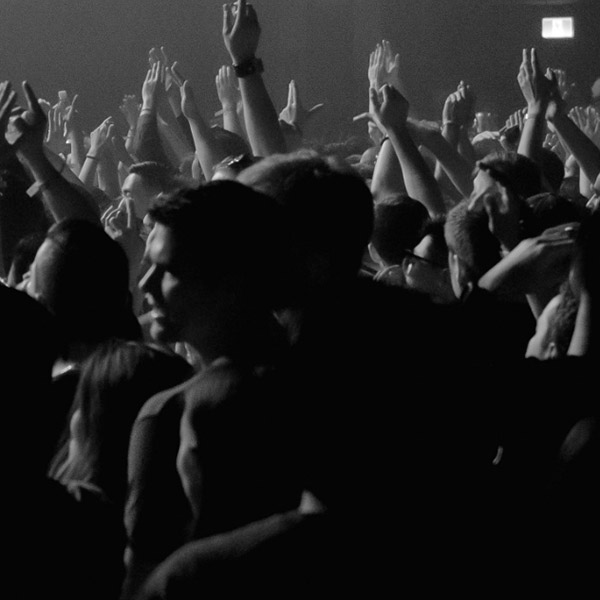
That arrived in 1986, when the Haçienda became one of the first British clubs to commit to house music. Mike Pickering’s Friday night “Nude” turned imported Chicago and Detroit records into a movement, and by early 1987 a venue that had lost money for years was full seven nights a week. When the acid house night “Hot” landed in the summer of 1988, complete with a swimming pool and an Ibiza fantasy, the Second Summer of Love had its northern capital.
How not to run a club
Success nearly killed it. As clubbers embraced ecstasy, bar takings collapsed, because a crowd on MDMA drinks water, not lager. The economics of a nightclub simply stopped working. Gang violence and repeated shootings followed, and the licensing battles piled up. Peter Hook, New Order bassist and reluctant co owner, later estimated the Haçienda lost as much as eighteen million pounds. He titled his memoir of the experience “How Not to Run a Club,” which is both a joke and an accurate balance sheet.
The last night was 28 June 1997. The building was demolished in 2002 and replaced, with grim irony, by luxury apartments trading on the name.
Why it still matters
The Haçienda is the clearest proof that the guitar world and the electronic world were never really separate. A post-punk label, guitar money, and a Situationist slogan built the room where British rave culture found its feet. Its DNA runs through Happy Mondays and the Stone Roses on one side and 808 State and the Chemical Brothers on the other. In 2010 Hook even had bass guitars built from planks of the old dancefloor, fretboards still marked with stiletto dents and cigarette burns. It is the perfect closing image: an instrument of the rock era, carved out of the floor where dance music won.
Sources: Wikipedia (The Haçienda), BBC News, Manchester Evening News, The Vinyl Factory.