Ten Lux and No Darker: How Japan Legalised Dancing by Writing a Lighting Spec Into Law
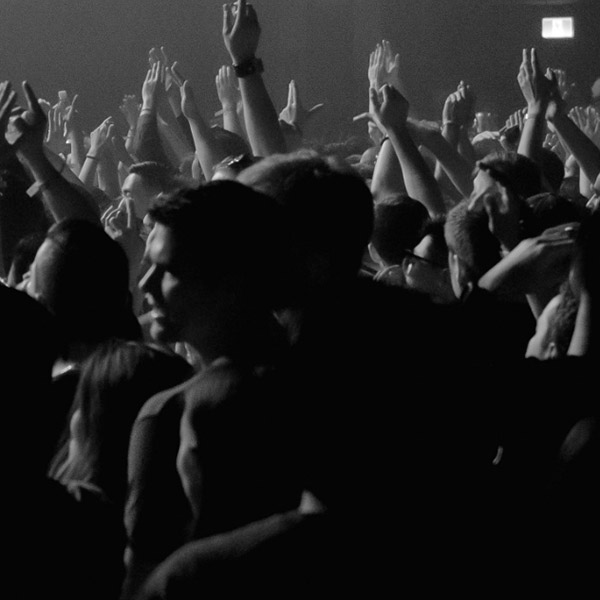
For most of Japan’s postwar era, the thing that could get a nightclub raided was not the volume, the hours or the drugs. It was the dancing.
A 1948 Law Written for Dance Halls
Fueiho, the Law Concerning Business Affecting Public Morals, was enacted in 1948 under the Allied occupation. Its actual target was prostitution operating out of dance halls, so it defined any venue where customers danced as an adult entertainment business. That classification came with a special licence, a minimum floor area of roughly 66 square metres, and a hard shutdown between midnight and sunrise.
For decades nobody used it against clubs. As a 2014 Japan Times editorial put it, the applications were complex, detailed and usually rejected, so owners stopped bothering to file them and police looked the other way. An entire generation of Japanese club culture grew up in that grey zone: Tokyo house and techno rooms with sound systems that visiting DJs still talk about, all of them technically operating outside the law.
The Year the Police Started Looking
That ended in December 2010, after a university student died in a brawl outside an Osaka club. Osaka police responded with systematic fueiho enforcement in Ame-mura, the city’s long-standing nightlife district, where more than twenty venues received official warnings during 2011. The tactic travelled. Within months, raids reached Tokyo, Kyoto and Fukuoka.
What made the crackdown surreal was the charge. Owners were not prosecuted for noise or violence. They were prosecuted for permitting dancing without a licence, an offence written in the language of corrupting public morals.
The Case That Broke It
In 2012 police arrested Masatoshi Kanemitsu, who ran the Osaka club NOON. On 25 April 2014 the Osaka District Court acquitted him, finding that his customers were neither engaging in indecent behaviour nor threatening standards of sexual morality. A high court later upheld the acquittal. His defence had argued that applying a 1948 morality statute to a modern club infringed on freedom of expression and the right to pursue happiness.
The verdict fed a campaign already running. Let’s Dance, organised by the lawyer and former DJ Takahiro Saito and publicly backed by Ryuichi Sakamoto, delivered a petition to the Diet in 2013 carrying 155,879 signatures. On 17 June 2015 the House of Councillors passed a revision. It took effect on 23 June 2016, sixty-eight years after the original law.
The State Now Measures the Light
Here is the part the celebratory version skips. The reform did not simply decriminalise dancing. It created a new licence class, Tokutei Yukyo Inshokuten Eigyo, and attached a technical condition to it: the venue has to maintain lighting of at least 10 lux, roughly the brightness of a cinema before the house lights go down.
Police take the reading in seated areas rather than on the floor, which leaves designers some latitude. The principle is still strange. A state that had regulated nightlife through morality swapped in a photometric standard instead. Darkness, the basic raw material of every club room since the Loft, became a licensing variable with a number attached.
The zoning conditions bite harder than the lux figure. Licensed venues have to sit outside residential areas. In Tokyo that left 638 eligible districts, with parts of Roppongi, Daikanyama, Aoyama and Nakameguro ruled out, which is to say several of the neighbourhoods where the clubs already were. Saito told the Japan Times that many venues fell outside the permitted zones and that the definition of yukyo, meaning entertainment, remained vague. By May 2016, Tokyo police counted just 70 applications across 14 prefectures. There is also a loophole that says everything about the law’s real subject: a club that stops serving alcohol after midnight needs no new licence at all and can stay open around the clock.
Why It Still Matters
Japan is not unusual in policing nightlife. It is unusual in how legible the mechanism is. Sixty-seven years of a statute nobody enforced, five years of one everybody suddenly did, then a fix delivered as a paragraph about illumination and postcodes.
The lesson for anyone who cares about small rooms is dull and durable. Venues rarely die from an outright ban. They die from a definition, a licensing category, a decibel limit or a change of use notice. The thing worth watching is never the ban itself. It is which measurable quantity the regulator decides to stand in for the thing it actually dislikes.