The Vault Between Two Cities: How Tresor Wired Detroit Techno Into Reunified Berlin
Most legendary clubs are remembered for a sound. Tresor is remembered for a room. When Dimitri Hegemann went walking through the abandoned strip of land between East and West Berlin in early 1991, he found the gutted safe deposit vaults of the former Wertheim department store on Leipziger Strasse: steel doors, thousands of rusted lockboxes, a low concrete ceiling. He did not soundproof it or soften it. He plugged in a sound system and let the concrete do the work. Tresor opened in March 1991, a few months after German reunification, in a bank vault that had sat sealed under no-man’s-land for decades.
A room that matched the record
The timing was the whole story. Hegemann had already run the Ufo Club with his Interfisch label from 1988, one of the first homes for house and techno in West Berlin, but Ufo collapsed in 1990. The vault gave him something Ufo never had: a space whose brutal, echoing hardness matched the music he wanted to play. The main Tresor floor was reserved for hard techno, industrial and acid, while an upper room called Globus carried the mellower house sound.
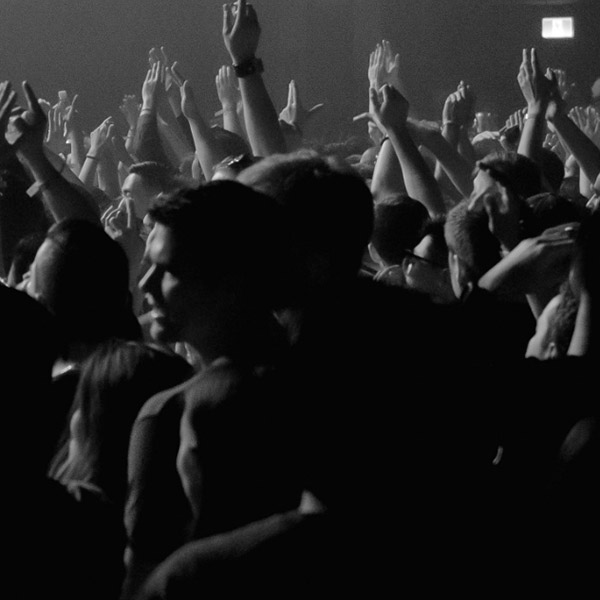
Young people from both halves of a city that had just stopped being two cities came down the stairs and danced together in a former bank. The architecture was not a metaphor anyone had to invent. It was already there, in steel and concrete.
The wire to Detroit
What made Tresor more than a good room was a phone line to Detroit. Hegemann had traveled to the American Midwest in the late 1980s and built a working friendship with the city’s techno underground. When he started the Tresor label in October 1991, the first release did not come from a Berliner. Catalog number Tresor 1 was X-101, an alias of Underground Resistance, the Detroit collective that Mad Mike Banks, Jeff Mills and Robert Hood had formed in 1989. Their record landed in the Berlin clubs and, by the label’s own account, conquered them overnight.
The exchange that followed was not a licensing deal. It was a conversation. Over the next few years Tresor pressed records by Jeff Mills, Blake Baxter, Juan Atkins, Robert Hood, Eddie Fowlkes and Drexciya, and put Detroit producers on the same bills and in the same studios as Berliners. The 3MB project paired Moritz von Oswald, who would soon build the dub techno blueprint as Basic Channel, with Juan Atkins and Eddie Fowlkes. Detroit gave Berlin a language. Berlin gave Detroit a room full of people who treated the music as serious art rather than a novelty. As the Guardian put it on the club’s thirtieth birthday, “No established disco would have played this music.”
Why the live room mattered
It is easy now to talk about Tresor as a label with a famous catalog, but the point was always the floor. This was a place where Jeff Mills and Juan Atkins played to a crowd standing between vault doors, where the sound had nowhere to escape and hit the body directly. The records document a scene, but the vault was where the scene actually happened, night after night, in a city rebuilding its own idea of itself.
That is also why the ending stings. After years of short-term leases, the city sold the Leipziger Strasse land to developers, and Tresor played its final nights there in April 2005, with queues down the street until Monday morning. It stayed dark for two years before reopening in May 2007 inside a decommissioned power plant on Koepenicker Strasse, a bigger, colder industrial shell for a bigger, colder era of techno.
The original vault is gone, buried under offices now. But the idea it proved has outlasted the room. A genre does not need a purpose-built venue. Sometimes it just needs the right ruin, at the right moment, with a door heavy enough to keep the sound inside.