The Floor That Was Built to Bounce: How Glasgow’s Barrowland Ballroom Became a Rock Venue by Accident
Ask a touring guitar band to name the best room they have ever played and a startling number of them, from every scene and every decade, land on the same answer: a former dancehall on Glasgow’s Gallowgate that was never designed for rock music at all. The Barrowland Ballroom was engineered in the 1930s for foxtrots and swing orchestras. Almost everything that makes it a pilgrimage venue for loud electric music is a happy accident of physics meant for something else entirely.
A room built for dancers, not amplifiers
The Barrowland opened in 1934, built by Margaret McIver, the formidable “Barras Queen” who ran the sprawling street market below. The hall was meant as somewhere her stallholders could socialise once the barrows were packed away. It was designed for unamplified orchestras, so the acoustics had to carry a live band to the back of the room with no PA to help. Bandleader Billy McGregor, of Billy McGregor and the Gaybirds, famously asked for the acoustic tiles that still line the ceiling. Those tiles, installed to keep a dance orchestra intelligible, are one of the reasons a wall of distorted guitars still sounds like music there instead of mud.
The original building burned down in 1958. It was rebuilt and reopened on Christmas Eve 1960, and with it came the feature every musician mentions first: a sprung dancefloor of Canadian maple, mounted to give under a dancer’s weight and spare their knees through a long night of quicksteps.
The physics of the bounce
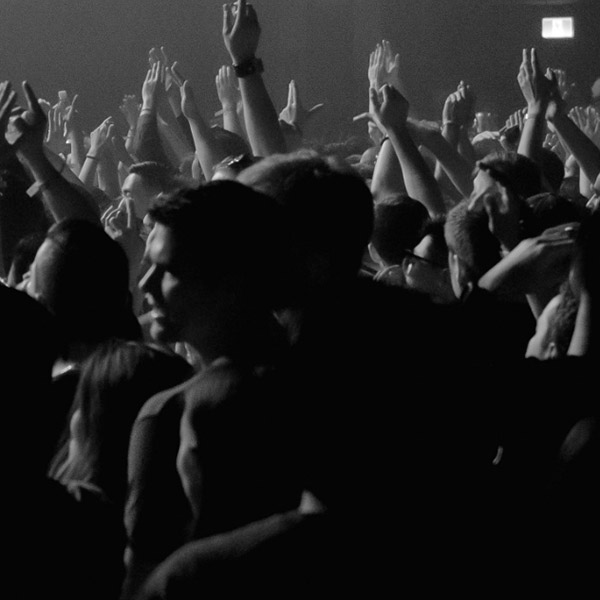
Here is the accident. A floor built to cushion ballroom dancing turned out to be the perfect surface for a rock crowd. When close to two thousand people jump in time, the maple flexes and returns the energy, and the whole room begins to move as one body. Musicians on stage feel it through their feet before they hear it. The bounce became so central to the experience that around 1988 the original floor could no longer take the punishment of a full crowd throwing itself upward, and the structure had to be reinforced to survive the very thing it had accidentally perfected.
The Barrowland only became a dedicated concert venue in 1983. Simple Minds effectively relaunched it that year by filming the video for “Waterfront” inside the hall, and the band’s bond with the room runs deep enough that they later released a live recording made there on 13 August 1991. Decades on, Biffy Clyro returned to the same floor for a live album, one of a long line of bands who treat a Barrowland recording as a way of bottling a crowd that other venues cannot reproduce.
Why bands keep choosing it
Capacity sits somewhere around nineteen hundred standing, small enough that the back wall never feels far from the stage, large enough to generate real weight. The low ceiling pins the sound down onto the crowd. There is no seating to break the room into tiers, no barrier of distance between a guitarist and the people bouncing on that maple. In 2024, Time Out named it the best music venue in the United Kingdom, chosen by the artists who had actually played it, which is the only jury that really counts.
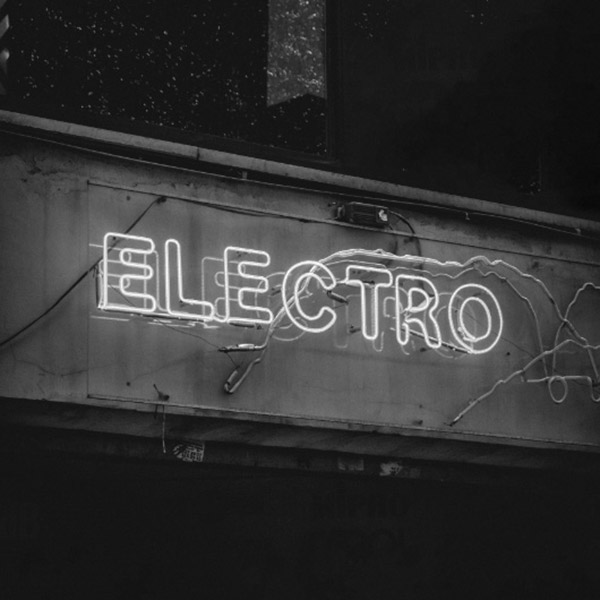
Outside, the animated neon sign, believed to be the largest of its kind in Britain, has become as much a Glasgow landmark as anything the band inside is playing.
An argument for the room
The Barrowland is a useful corrective to a certain kind of thinking about live music, the idea that a great gig is mostly about the band and the gear. The truth the Gallowgate keeps proving is that architecture is an instrument too. A sprung floor, a tiled ceiling, a low roof and a market queen’s stubbornness combined into a machine for turning a crowd into a single moving thing. Nobody set out to build the best rock venue in the country. They set out to build somewhere to dance, and the guitars arrived fifty years later to find the room already waiting for them.