

The Host Who Refused to Be Called a DJ: David Mancuso, Born 20 October 1944, and the Party That Wrote the Club Rulebook
David Mancuso was born on 20 October 1944 in Utica, New York, and he spent his first years in an orphanage. By the time he died in Manhattan in November 2016, aged 72, he had built something the dance music business still copies without always knowing it: a party where the room, the sound and the guest list mattered more than the DJ.
He disliked the word DJ. Accounts of his life say he preferred to call himself a musical host, and the distinction explains almost everything about The Loft.
A Rent Party With an Invitation
The first Loft party took place on 14 February 1970 at Mancuso’s home at 647 Broadway, in lower Manhattan. By most accounts he needed money for rent. Roughly three dozen invitations went out, about a hundred people showed up, and the card carried the phrase Love Saves the Day, which became the name of that first night and a motto for everything after.
Within months the gathering was weekly. It was private, spread by word of mouth, and nothing was sold on the premises. That last detail was not a quirk. Without a bar there was no cabaret licence to apply for, and New York’s consumer affairs officials eventually accepted the argument, ruling in the mid 1970s that the parties could continue as long as no food or drinks were sold. It also meant the night did not have to end when the bars closed.
The Room Was the Instrument
Mancuso put his money and his obsession into sound. Sources describe a system built with engineer Alex Rosner around Klipschorn loudspeakers, quality amplification and carefully chosen cartridges, tuned to the room rather than turned up to impress it. In his own advice for anyone starting a party, he recommended good acoustics, a high ceiling, a wooden floor, a clean system at moderate volume, balloons, a mirror ball and healthy food, with the music chosen last.
He also arranged the turntables and speakers so that dancers faced the dance floor rather than a booth. That sounds minor until you remember how many clubs since have put the DJ on a stage and the crowd in front of it. Mancuso wanted the opposite, a host in the background and a room full of people listening to each other.
The Rulebook Others Copied
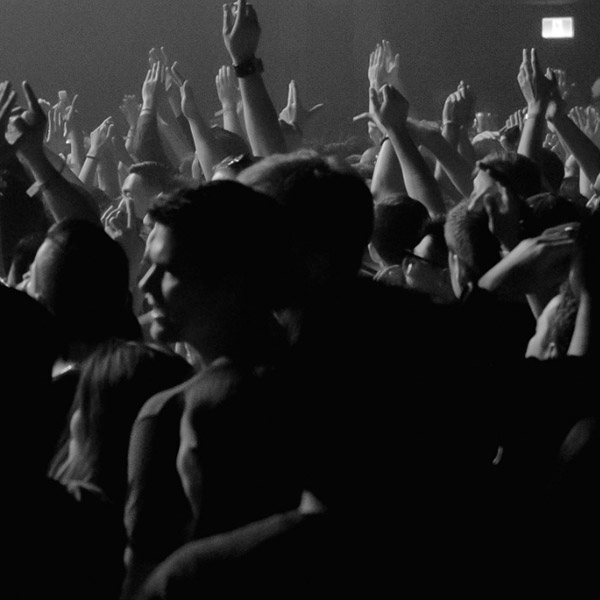
The mix of guests was part of the design. Rosner later estimated that the crowd was about sixty percent Black and seventy percent gay, and attendees remember an unusually open mix of races, orientations and incomes. Admission was a few dollars, and people with an invitation were not turned away for lack of money.
The influence ran through the people who danced there. Larry Levan, Nicky Siano and Frankie Knuckles were all early regulars, and writers have traced a line from The Loft to the Gallery, 12 West, Paradise Garage and the Warehouse in Chicago, whose name gave house music its own. Mancuso also helped found the New York Record Pool in 1975, giving DJs a legitimate route to promotional records and changing how club music reached the floor.
After the Golden Address
The Loft moved to 99 Prince Street in SoHo in the mid 1970s, which many regard as its most influential home, and it kept going until the building was sold in 1984. Later spaces in Alphabet City and the East Village never recaptured that crowd, and Mancuso himself spoke of losing the majority of his attendance after the move.
He did not retire the idea. He started parties in Japan and London, and the London branch, Lucky Cloud Soundsystem, still keeps the format alive. In New York the Loft party still returns on holiday weekends, and the 50th anniversary was marked in February 2020.
Why It Matters Now
Every time a venue talks about its sound system before its lineup, or keeps phones in pockets, or treats the dance floor as a shared space and not a product, it is quoting Mancuso whether it knows it or not. Electronic music is a culture of rooms as much as records, and he was among the first to say so out loud.
Listen This Week
Seek out the David Mancuso Presents The Loft compilations from 1999 and 2000, which he co-produced, and play them on the best speakers you own at a modest volume. Then ask what the room is doing for the music.

Leave a Reply