

Four Hundred Transducers Under Your Feet: How fabric Built a Dancefloor That Plays Bass Through the Soles
Most clubs treat the floor as a place to stand. In October 1999, fabric opened beneath Smithfield Market in London and treated it as a loudspeaker. The idea was simple enough to explain and strange enough to feel: if low frequencies can be felt as well as heard, put the machinery for feeling them in the thing people are standing on.
A Cold Store Turned Into an Instrument
The club took over the old Metropolitan Cold Stores on Charterhouse Street, a Victorian refrigeration building opposite the meat market. Keith Reilly, who led the project, wanted a room built around sound rather than decor. Room One, the biggest of three, got the signature feature: a Bodysonic floor, in which sections of the dancefloor are coupled to roughly 400 bass transducers. These do not push air like a cone speaker. They shake the floor itself.
The effect is hard to describe to anyone who has not stood on one. Sub-bass below the range where a normal system sounds clean becomes a sensation in the shins, knees and sternum. Paired with a four-corner speaker layout, it meant a DJ could play a kick drum and a sub line that the body registered before the ear processed it. For the drum and bass and dubstep nights that later made the FABRICLIVE name, that was the whole point.
Why the Floor Mattered to the Music
London in the late nineties was deep into a bass-heavy decade, from jungle through two-step and into broken beat. Those genres write their weight into frequencies that small club systems smear or lose. A floor that carries the bottom end physically gave producers a room where the mix on their hard drive could finally be felt at the intended depth. Residents and visiting DJs learned to play to the room, leaving space in the low end rather than stacking it.
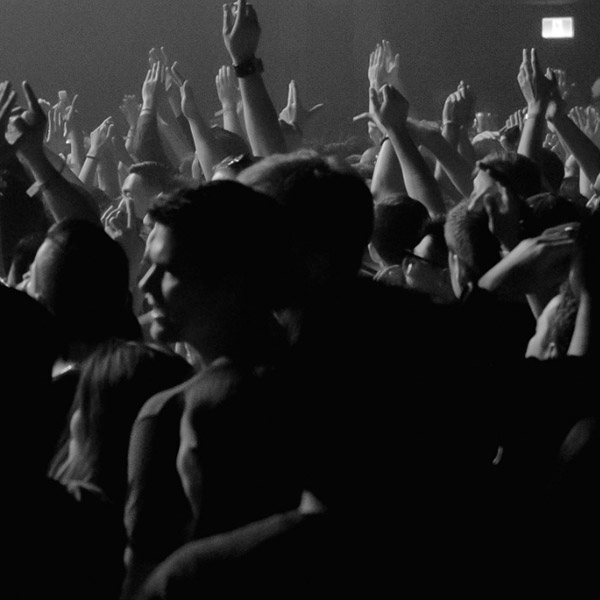
It also changed the way people danced. A crowd standing on a resonating floor moves differently from one standing on concrete: shoulders drop, knees soften, and the whole room tends to lock into the same pulse. That shared physical feedback loop is a large part of why the venue kept climbing DJ Mag’s club rankings for years.
Closed in 2016, Saved Within Weeks
The story nearly ended in 2016. After two drug-related deaths at the club, Islington Council revoked the licence, and in September the closure was announced as permanent. A public campaign followed, and in November a deal was struck with the council and the Metropolitan Police. The conditions were strict: a photo ID system, covert surveillance, lifetime bans for anyone found dealing or in possession, and no under-19s from Friday evening to Monday morning. The club reopened in 2017 and cut the number of bass nights it ran.
Whatever one thinks of those terms, the episode showed how fragile a venue built on a technical idea can be. A system that took years to tune can be switched off by a licensing committee in an afternoon.
A New Floor for the Second Quarter-Century
The original design stayed in service for a long time. In early 2025, after a sound upgrade that began in August 2024, fabric installed a new Room One floor straight after its New Year’s Day party, working with Martin Audio and Powersoft and using the latter’s Mover linear transducers. It was the first rebuild of the floor since the club opened.
For anyone who cares about how electronic music is delivered rather than just made, fabric is the clearest case study in London. The record is only half the work. The other half is the room, and in this one the room is physically part of the track.


Leave a Reply