

Amsterdam? Where’s That? How a Villa Under the Euromast Made Rotterdam the Home of Gabber
Most club scenes are named after a sound. Gabber was named after the people. In the early 1990s, Rotterdam took a piece of Amsterdam slang, a word for a mate or a friend, and turned it into the name for the fastest, hardest dance music the Netherlands had heard. The music ran from around 140 to 190 beats per minute, built on distorted kick drums and shouted samples, and for a few years it was the soundtrack of a port city that liked to see itself as the opposite of the capital.
A Villa in the Park
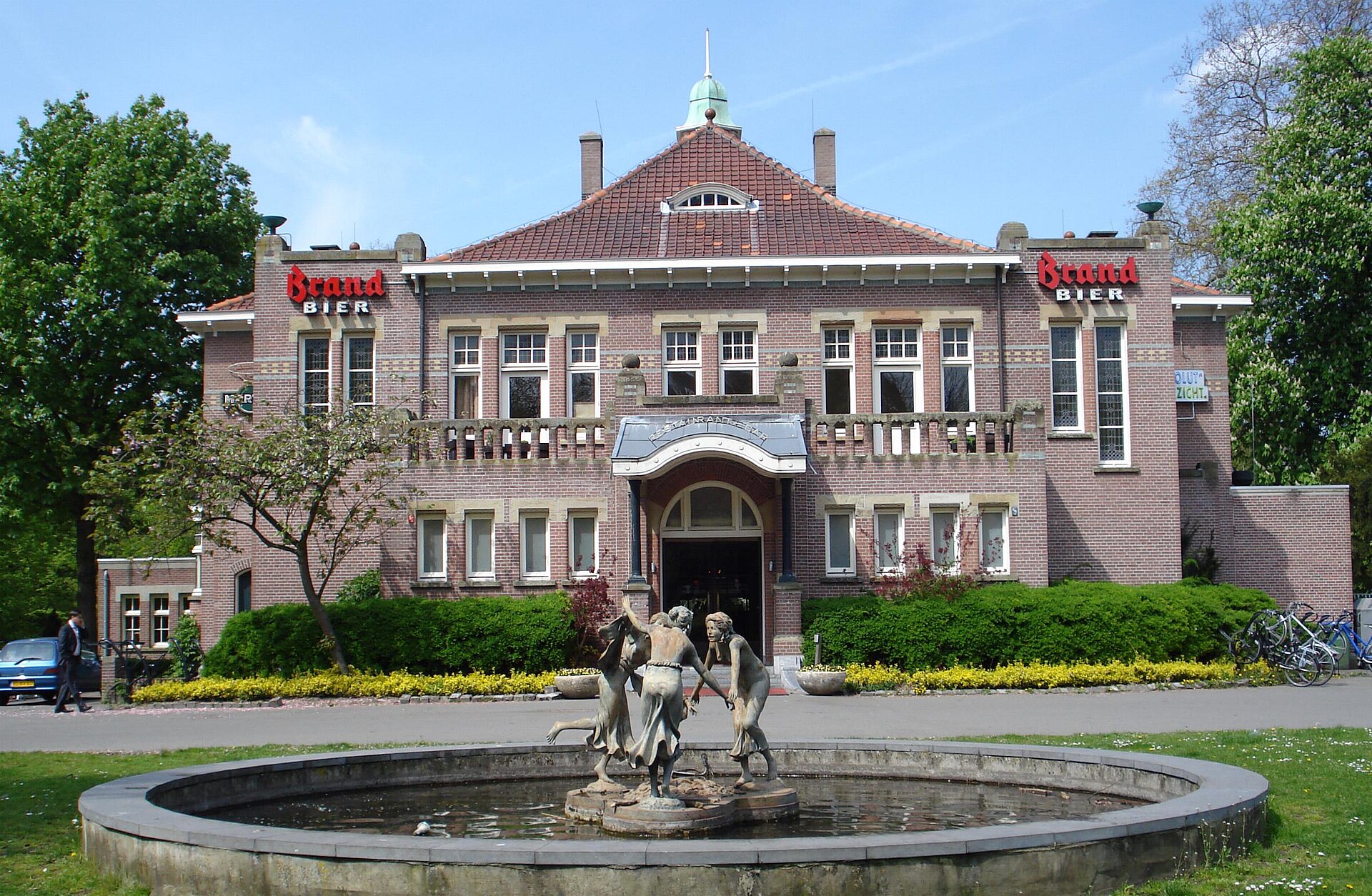
The scene had an unlikely home. Parkzicht was a stately early 20th century villa in Het Park, right under the Euromast, that had been turned into a discotheque. From December 1989, DJ Rob held a Friday residency there and became one of the first in the city to play records alongside a drum machine. By the early 1990s those Friday nights were where Rotterdam’s hardcore crowd gathered.
On December 4, 1992, DJ Rob and Paul Elstak put on the first Nightmare in Rotterdam party at Parkzicht. As the crowds grew, the parties moved to the Energiehal, a sports and events hall in the northwest of the city, where monthly raves drew thousands until the building was demolished in 1999.
A Label Behind a Shop Counter
Paul Elstak, born in The Hague in 1966, was working behind the counter of Mid-Town Records when he founded Rotterdam Records in 1992. The label gave the scene a voice and a catalogue. One of its first releases was a 12 inch by Euromasters with the title Amsterdam Waar Lech Dat Dan? Roughly: Amsterdam, where is that?
The joke landed because the rivalry was real. Amsterdam and Rotterdam had been sniping at each other for centuries, and in the 1990s the football clubs Ajax and Feyenoord kept it alive every weekend. Rotterdam Records leaned in, with sleeves drawn by the cartoonist Kees Linia that played up the feud. The word gabber followed a similar path. One widely told account says an Amsterdam DJ dismissed the Rotterdam crowd as a bunch of gabbers having fun, and that Elstak answered on the Euromasters record with a line that translates as “being a gabber is no disgrace”.
Roots in Frankfurt and New York
Rotterdam did not invent hard, fast techno on its own. In 1991, the Brooklyn DJ Lenny Dee released We Have Arrived by Mescalinum United, a track by the Frankfurt producer Marc Acardipane, as the first record on his New York label Industrial Strength. It is often described as the first hardcore track, and its pounding kick set a template the Dutch producers pushed even further.
Amsterdam answered too. In 1993 Fred Berkhout launched Mokum Records, which took a more experimental line and printed an antifascist slogan on its records, a response to the far right fringe that some parts of the scene attracted. Meanwhile the promoters ID&T had already staged the first Thunderdome in 1992, and its events soon filled arenas in neutral cities, away from the Amsterdam versus Rotterdam friction.
A Dance, a Tracksuit and a Haircut
Gabber was never only a sound. Its dancers developed hakken, a rapid stamping and chopping footwork built for kick drums at speed. The uniform was just as recognizable: Australian tracksuits by the Italian brand L’Alpina, Nike Air Max BW trainers, shaved heads for the boys and undercuts with ponytails for the girls. Very few electronic scenes have been so easy to spot on a train platform.
Peak, Crash and Return
By the middle of the decade gabber was on Dutch television and in the charts, and that success brought parody records and commercial pressure. Elstak himself moved toward the lighter, faster melodies of happy hardcore in 1995 and 1996, which split his audience. Parkzicht closed in 1996 after two shooting incidents, and the Energiehal hosted its last rave on Queen’s Day, April 30, 1999.
The style never disappeared. Rotterdam Records paused in 2012 and returned in 2018, Thunderdome came back in 2017, and a new generation of producers has picked up the distorted kick in recent years. The core idea still holds: a club, a shop and a local label can turn one city’s pride, and its sense of humour, into a sound heard around the world.
Cover photo: Public domain, via Wikimedia Commons




Leave a Reply