

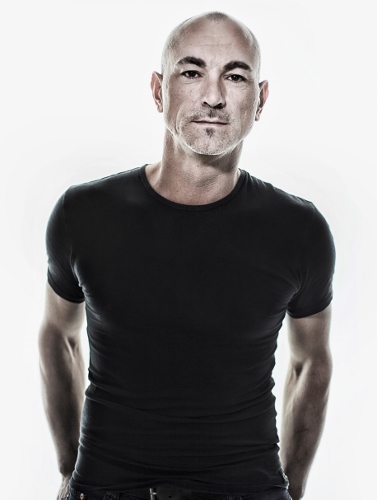
Built to End the Night: Robert Miles, Born 3 November 1969, and the £150 Piano Line That Taught Dance Music to Slow Down
Robert Miles was born Roberto Concina on 3 November 1969 in Fleurier, Switzerland, to Italian parents, and grew up in the small town of Fagagna in Friuli. He trained on piano, worked as a DJ in Italian clubs and on private radio, and in 1990 used his savings to build a studio and a pirate radio station. He died on 9 May 2017, aged 47. In between he wrote one of the most recognisable instrumentals in dance music, and he wrote it for the end of the night.
A Track for the Last Slot
The idea, by Miles’s own account, came from two places. One was a set of photographs of child victims of the Bosnian war that his father brought home from a humanitarian mission. The other was practical DJ knowledge. In 1990s Italy, clubbers drove long distances home after dancing until dawn, and the weekly toll of road accidents, known as the strage del sabato sera, was grim. Miles wanted a record to close a set, something that would bring a room down gently before people picked up their car keys.
That purpose shaped the sound. Where the dance floor of the period pushed forward on hard kicks and acid lines, Children keeps a steady four on the floor but lets a piano melody float above it, with soft pads and synthetic strings bathed in delay and reverb. Synth specialists have traced the piano and pad palette to a Kurzweil K2000. The pulse keeps moving, yet the mood is closer to a lullaby than a peak time banger.
Three Labels and a Long Way Round
The record did not arrive as a hit. Children first appeared in Italy in January 1995 on a DBX label EP called Soundtracks, run by the producer and DJ Joe T. Vannelli, and it did not chart. Vannelli took the track to a club in Miami, where Simon Berry of the British label Platipus Records heard it. Berry worked with Vannelli and James Barton of Liverpool’s Cream to release it properly in November 1995, and the single then moved with startling speed, helped by a run of Essential Tune choices on Pete Tong’s radio show and a licensing deal with Deconstruction in the UK.
The numbers are the part people remember. Children reached number one in more than a dozen countries and was Europe’s most successful single of 1996. Dreamland, the album built around it, followed on 7 June 1996, and Miles won the Brit Award for International Breakthrough Act in 1997. Accounts differ on how little the original track cost to make, but the figure usually quoted is a startling £150.
What Dream House Left Behind
Critics reached for new vocabulary. Dream house and dream trance became the shorthand for piano led, melodic, four on the floor instrumentals, and other producers followed with their own slow motion rave elegies. The style was easy to mock as a novelty for its soft focus, and that is partly why it has been underrated as a piece of dance music craft.
The case for Children is the discipline of it. It is built from very few ideas: a steady pulse, a piano theme that takes its time unfolding, and a restraint with dynamics that most club records never attempt. It is a track about leaving, written by a DJ who understood that the last record of the night does a different job from the first.
Miles moved on quickly from the formula. His second album, 23am, brought in vocalists and a looser, song led approach, and by the early 2000s he was running his own label, Salt Records, and releasing the more experimental Organik with guests including Bill Laswell and Trilok Gurtu.
On the anniversary of his birth, the lesson is a useful one for anyone who plays records for a living. The loud moment gets the credit, but the closing track is where a night is remembered. Robert Miles built an entire genre out of that realisation, with a piano line and a promise to get everyone home safe.
Cover photo: Salim Lamrani, CC BY-SA 4.0, via Wikimedia Commons





Leave a Reply