

Six Hundred Dollars and a Basement: How Dischord Records and Inner Ear Built Washington’s Punk Underground
Underground scenes rarely start with a business plan. In Washington, D.C., one started with a band that was about to stop existing and a small pile of money nobody knew what to do with. The Teen Idles had spent about a year playing shows and had earned a total of $600. By the autumn of 1980 the group was coming apart, and its members faced a simple choice: divide the money, or use it to press the songs they had just recorded.
Ian MacKaye and Jeff Nelson chose the record. With help from Skip Groff, a local record store owner, they founded a label to put it out. They called it Dischord.
Dischord 001
The record was Minor Disturbance, an eight-song EP that lasts a little over nine minutes. It came out in December 1980 with the catalog number Dischord 001. The label organized the pressing and printing itself and ordered an initial run of 1,000 seven-inch discs. The sleeves were cut, folded and glued by hand by the band and their friends.
That do-it-yourself approach was not a pose. It was the only option available to teenagers in a city with no punk industry to speak of. MacKaye and Nelson ran the label from a shared residence that became known as the Dischord House, and they kept the scope deliberately local: Dischord limits itself to bands from the D.C. scene.
The Studio on the Porch
Minor Disturbance had been recorded in September 1980 at Inner Ear, with Groff producing and Don Zientara engineering. Inner Ear was not a commercial room. Zientara had moved to Arlington, Virginia, in 1974 for a government job, and he recorded music at home in his spare time, starting with harp and Celtic folk. Groff, who ran the Yesterday and Today record shop, introduced him to the young punk bands.
The setup was improvised. Zientara owned a four-track recorder and some home-built gear. The mixing board sat upstairs on the porch, cabled down to the basement where the bands played, and Wikipedia’s account of the session describes the whole rig as held together with clothespins. He later moved the control room into the cramped furnace room of his house.
Cheap, close and willing, Inner Ear became the default studio for the scene. Zientara’s credits include Minor Threat, Government Issue, Scream, Rites of Spring and Fugazi. In 1990 he moved the studio into its own building on South Oakland Street in Arlington, where it ran for more than three decades before closing in October 2021, after Arlington County moved to acquire the site. In 2022 he set it up again in his basement, back where it started.
A Handshake Instead of a Contract
What made Dischord unusual was not only its sound but its terms. As reported by the Washington Post in 1995, the label fronts the money to record and manufacture a release. Once those costs are recouped, the distributor takes 30 percent of the profit and the band and the label split the rest. There is no paperwork behind it. “We don’t use contracts, lawyers, any of those kinds of things,” MacKaye said. Nelson, who also designed the label’s logo, has said Dischord was never meant to be a profit-making venture.
The label sold its records at low prices and without financing from major distributors. Decades later the model still holds: Dischord had four employees in 2016, and in 2017 it put its whole catalog on Bandcamp, free to stream or to buy.
Why It Still Matters
For a band starting today, the Dischord story is less about nostalgia than about leverage. A label, a studio and a scene can be built from what is already in the room: one small budget, one person with a tape machine, and a group of friends willing to fold sleeves. Six hundred dollars bought a thousand records, and those records gave a city its own voice.
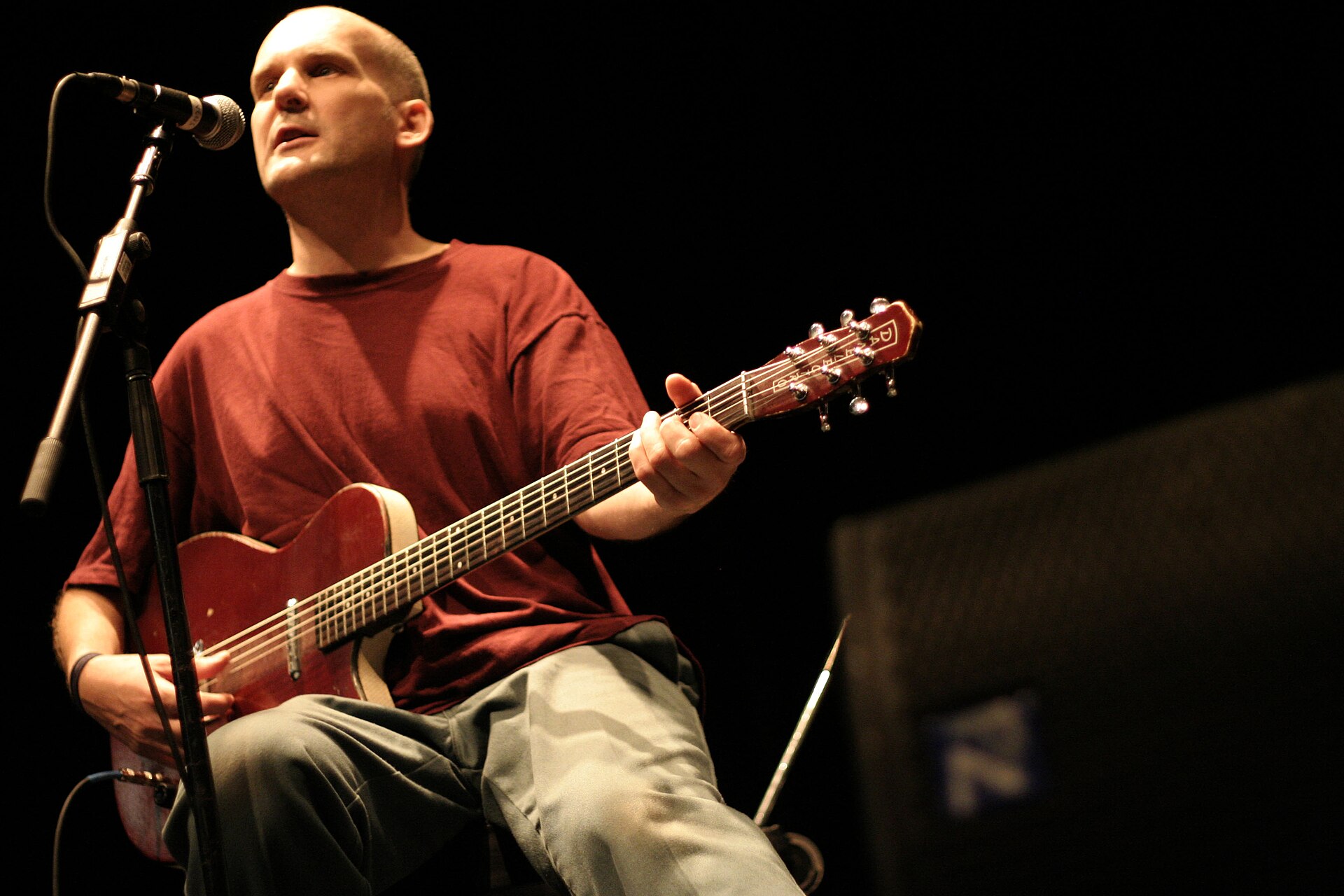
Cover photo: Daigo Oliva, CC BY-SA 2.0, via Wikimedia Commons




Leave a Reply