

Eleven Years and a Million Dollars: How Raymond Scott Wired Pop Music Into the Machine Age
Most family trees of electronic music start with Kraftwerk, Moog or a room full of tape machines in Cologne. One branch starts somewhere stranger: with a New York bandleader whose melodies millions of people know from cartoons, and who spent the second half of his life building machines that could write music on their own. His name was Raymond Scott, born Harry Warnow on September 10, 1908, and his influence travels through Robert Moog, ambient music and one of the most celebrated beat records ever made.
The Tune You Already Know
In late 1936 Scott formed the Raymond Scott Quintette, which despite its name was a six-piece group. It first recorded in February 1937, and its bestselling discs included Powerhouse, Twilight in Turkey and The Penguin. These were precise, mechanical, fast-moving pieces, closer to engineering than to a jam session.
In 1943 Scott sold his music publishing to Warner Bros., which allowed the studio’s music director Carl Stalling to adapt any composition in the Warner catalog. Stalling used Scott’s music in more than 120 Looney Tunes and Merrie Melodies shorts. Scott was never hired to compose for animation, yet the frantic factory theme of Powerhouse became one of the most recognizable sounds of the twentieth century, usually heard by people who had no idea who wrote it.
Manhattan Research
Scott was more interested in circuits than in fame. In 1946 he set up Manhattan Research Inc., a company that designed electronic audio devices and sold related products such as ring modulators and a keyboard theremin. One of his inventions, the Clavivox, received its patent in 1956. It was adapted from a theremin, and to build it Scott wanted a part from a theremin made by a young engineer called Robert Moog.
That was the start of a long working relationship. Moog met Scott in the 1950s, designed circuits for him in the 1960s and considered him an important influence. Only a few Clavivoxes were ever built and the instrument never caught on, but the person who would make the synthesizer a household object had learned part of his trade working for a bandleader.
A Machine That Composes
Scott’s biggest project was the Electronium. Work began in 1959 and a working unit existed by 1969. It was not just a synthesizer: built entirely from analog circuitry, it combined sound generation with algorithmic composition, so the machine could generate musical ideas that the operator then guided. Scott later said he had spent 11 years and close to a million dollars developing it.
The machine caught the attention of Berry Gordy, who met Scott in 1969. Motown bought an Electronium, and in 1971 Scott became director of the label’s electronic music and research department in Los Angeles, a post he held until 1977. No Motown recording using his inventions has ever been publicly identified, which makes it one of the great what-ifs of soul and electronic music alike.
Music for the Nursery, Heard as Ambient
Scott also made records with his machines. Soothing Sounds for Baby, recorded between 1959 and 1963 and released by Epic in 1964, came in three volumes aimed at infants from one to eighteen months, produced with the Gesell Institute of Human Development. Its slow, repeating electronic patterns were meant to calm babies. Decades later listeners compare them to Brian Eno, Kraftwerk and Tangerine Dream, and the albums are now heard as early ambient and minimalist music.
Much of this work stayed out of sight until the Dutch label Basta reissued Soothing Sounds for Baby in 1997 and then, in 2000, released Manhattan Research Inc., a two-CD set with a 144-page book collecting Scott’s electronic work from the 1950s and 1960s. A new generation of producers finally heard the lab tapes.
The Line Runs Forward
One of them was J Dilla. On Donuts, his final album, he sampled Scott’s Lightworks and Bendix 1: The Tomorrow People for the track Lightworks, and Sprite: Melonball Bounce for Workinonit. The quintet recordings, meanwhile, returned to television through The Ren and Stimpy Show, which used them in twelve episodes.
Scott died on February 8, 1994. Two years later Mark Mothersbaugh of Devo bought the only surviving Electronium, which no longer worked, and restoration led by Brian Kehew began in 2017, partly financed by Gotye. The machine is still being brought back to life, which feels right for an inventor whose ideas keep arriving a generation after he had them. Every producer who lets a sequencer or a generative patch suggest the next note is working in a room Raymond Scott wired first.
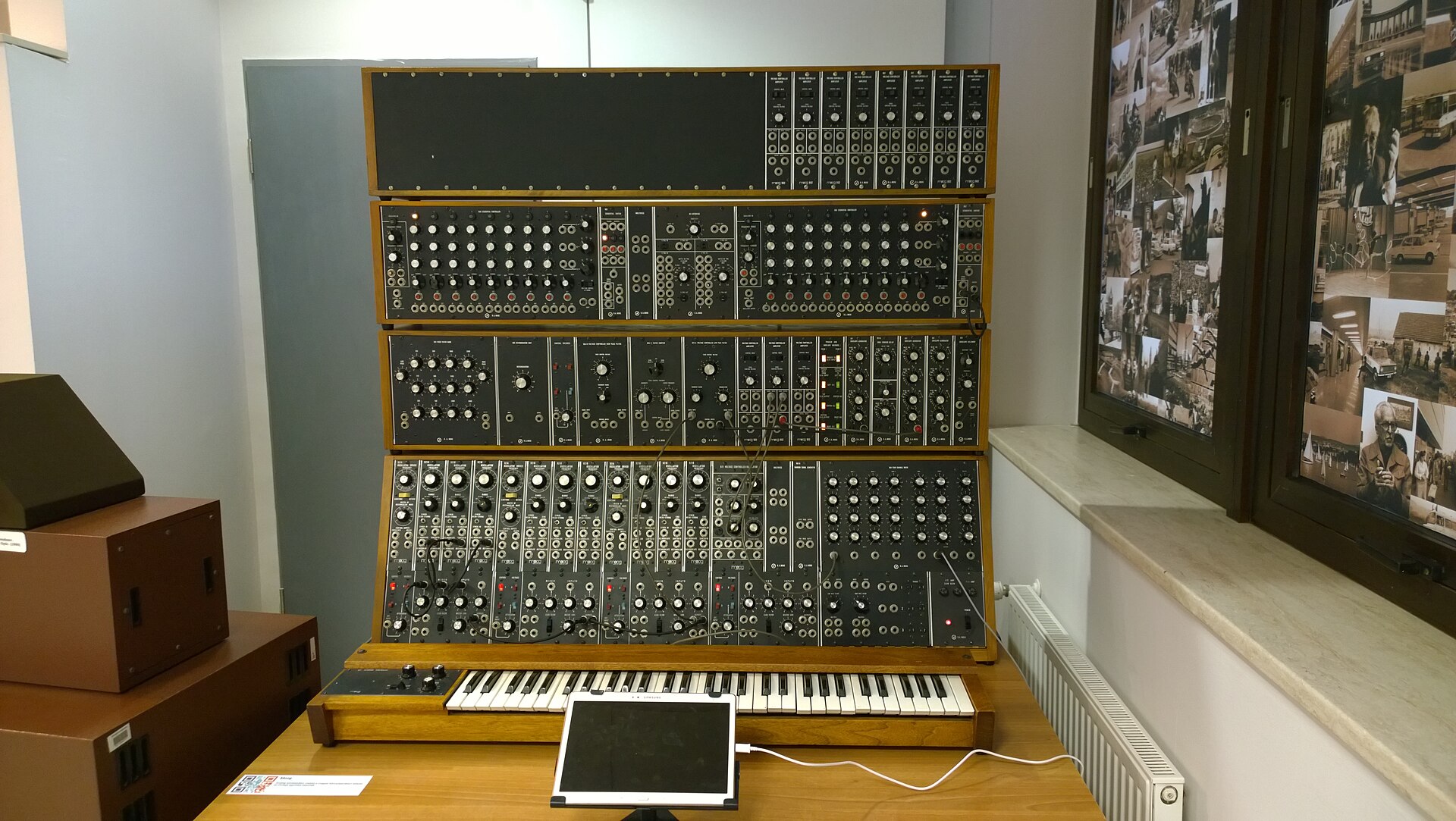
Cover photo: Attila Szász, CC BY-SA 4.0, via Wikimedia Commons






Leave a Reply