

Plucked String, White Noise and a Razor Blade: The Doctor Who Theme Turns 63
On Saturday 23 November 1963 the BBC broadcast the first episode of Doctor Who. Before any actor appeared, viewers heard something that did not sound like an orchestra, a band or any instrument they could name. Sixty-three years later the opening theme is still one of the most recognisable pieces of electronic music ever made, and it was built without a synthesizer, without a multitrack recorder and without a single musician playing it.
A Single Sheet From Ron Grainer
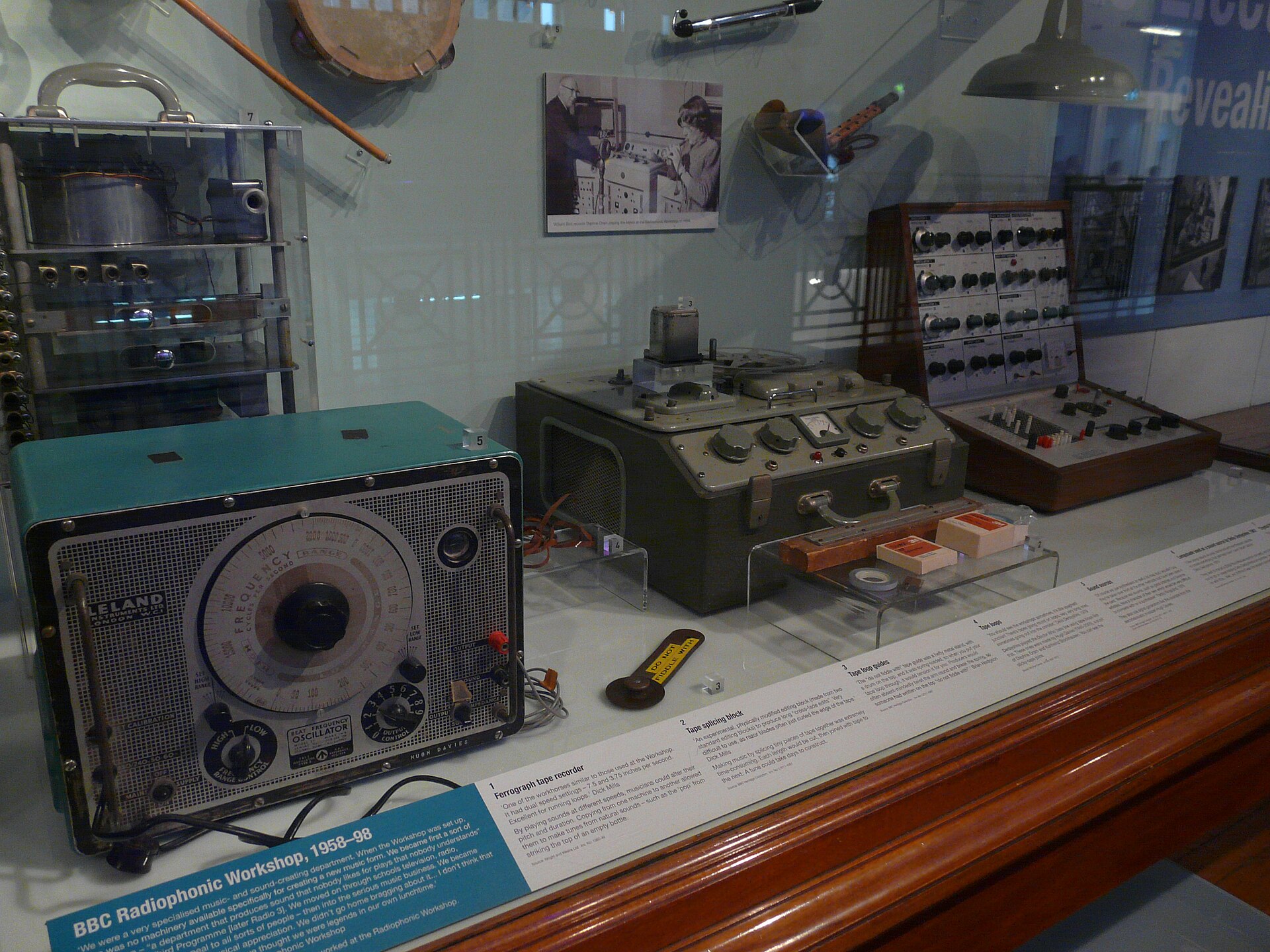
The composer was Ron Grainer, a prolific writer of television themes. According to Mark Ayres, Grainer’s score fitted on one sheet of manuscript paper. It set out a bassline and a swooping melody, plus written notes describing effects such as wind bubbles and clouds. Turning that page into sound was the job of the BBC Radiophonic Workshop, the corporation’s small electronic music department at its Maida Vale studios in west London, set up in 1958.
The person who did it was Delia Derbyshire, a mathematics and music graduate of Girton College, Cambridge, who had joined the Workshop in 1962. Her assistant on the job was Dick Mills.
Building Notes Out of Tape
Nothing in the room was designed to make music. The bassline started as a single plucked string, recorded and then copied at different pitches by changing the tape speed. The hisses, bubbles and clouds came from white noise, filtered and shaped by hand. The melody came from test-tone oscillators, equipment meant for calibrating studio gear. Derbyshire later said she made the theme mostly on the Workshop’s Jason valve oscillators.
Every note was its own length of quarter-inch tape. Derbyshire cut each one with a razor blade, trimmed it to the right duration and spliced it into sequence. The finished theme was assembled from separate lines: the plucked bass, the bass slides, the hisses, the swoops, the melody, a second melody line and the bubbles and clouds.
Mixing was its own problem. Instead of relying on a multitrack recorder, the parts were combined onto three tapes and played back on separate machines started at the same moment. Mills later summed up the result in one line: “There are no musicians, there are no synthesizers.”
Did I Write That?
When Grainer heard the finished piece he is reported to have asked whether he had really written it. The versions of Derbyshire’s reply differ: one says she answered “most of it”, another “some of it”. Either way, Grainer wanted to share the credit. The BBC, which kept its Workshop staff anonymous, did not allow it. Derbyshire received no on-screen credit and no royalties, and Grainer remains the sole credited composer.
Seventeen Seasons and a Long Shadow
Her arrangement stayed in use, with edits and added effects, until 1980, when Peter Howell replaced it with a new version made on analogue synthesizers. By then the technology Derbyshire had worked around had become a standard studio tool.
Derbyshire died in 2001. Her reputation has grown steadily since, helped by the rediscovery of her own tape works and her late-1960s project White Noise. For anyone who has ever built a track one sample at a time, the Doctor Who theme is a useful reminder: the first great piece of British television electronica was made by cutting tape, not by pressing keys, and the person who made it went uncredited for decades.
Cover photo: Loz Pycock, CC BY-SA 2.0, via Wikimedia Commons



Leave a Reply