

Doors at Seven, Done by Midnight: How Metalheadz Turned a Sunday Night in Hoxton Into Drum and Bass’s Test Lab
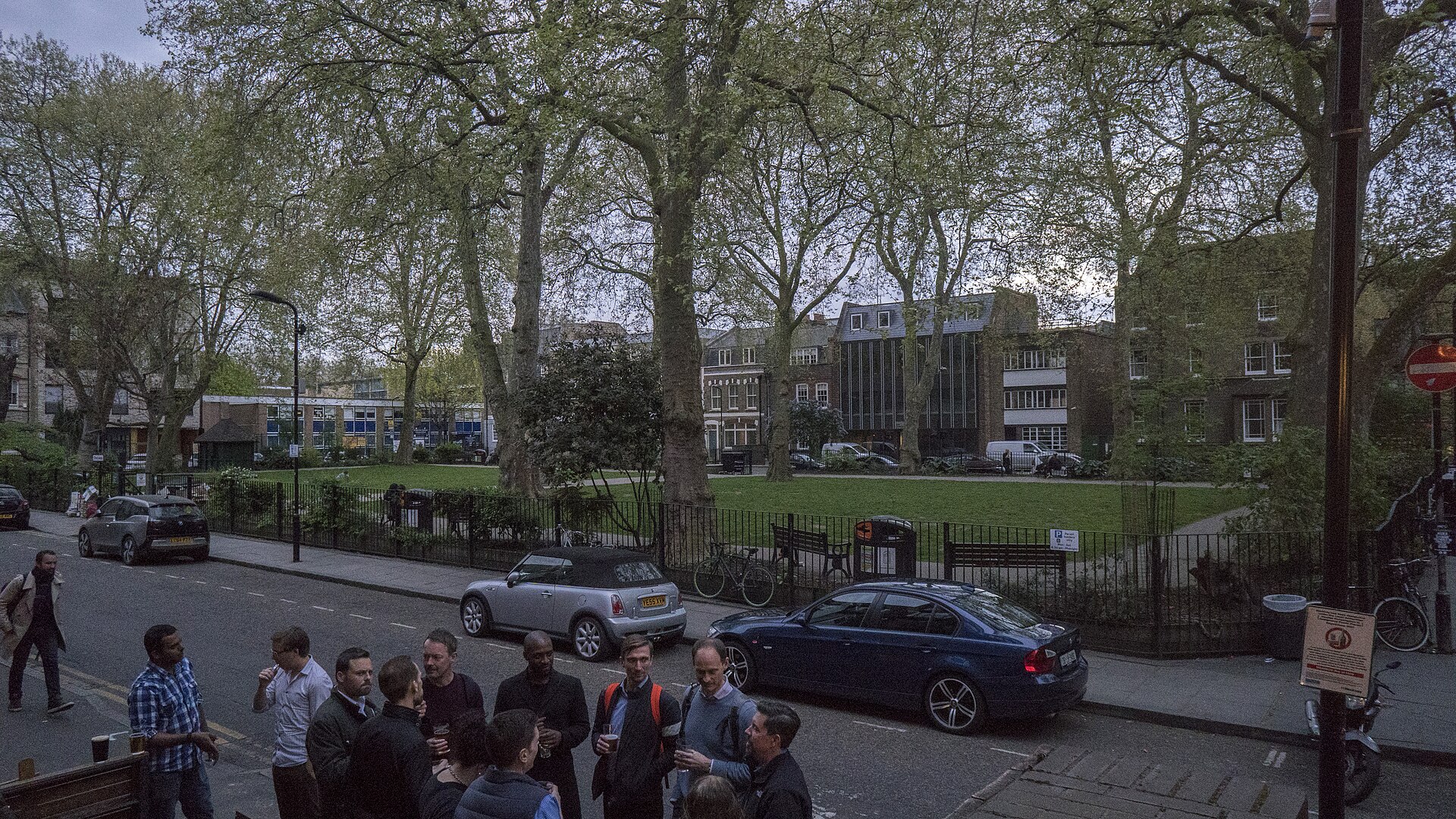
Sunday is the night clubs give away. Nobody expects a crowd, the promoters who matter are asleep, and the room is cheap. In July 1995, that is exactly the slot the Blue Note in Hoxton Square handed to Metalheadz. Storm, who ran the label with her partner Kemistry, later recalled that the club offered them a five-week trial. What followed was one of the most influential weekly nights in the history of electronic music, held in a basement that Grooverider remembered as holding no more than about 200 people.
A Label Named After a Dubplate
Metalheadz began in 1994 as a label run by Goldie together with the DJ duo Kemistry and Storm. The name, according to Goldie, came from Grooverider, who teased him about his obsession with metal dubplate acetates, the one-off records DJs cut to play unreleased tunes. The label’s first release was a split 12 inch with Doc Scott’s V.I.P. Drumz and Goldie’s V.I.P. Riders Ghost. By September 1995, two months after the Sunday night started, Goldie’s debut album Timeless was out on Metalheadz with FFRR.
None of that filled the Blue Note at first. In the oral history Red Bull Music Academy published in 2013, Goldie says the first twelve to fifteen sessions were close to empty. Then word spread. Doors opened at seven in the evening and the night finished at midnight, and Storm remembered the room reaching capacity by about half past seven.
Upstairs Chess, Downstairs Bass
Part of the charm was how unlike a rave it was. Upstairs there was Jamaican food and board games, chess and backgammon included. Downstairs was the club, and the sound was taken seriously. Goldie did not like the rig the venue already had, so the night brought in Eskimo Noise. Bevin Denton of the company told RBMA in 2014 that they used Nexo speakers driven by Crown amplifiers, with stacks placed along the long room and past the DJ booth. The bass was strong enough to make the turntables jump, and the crew fixed it with rubber bar mats and decoupling discs under the decks.
Behind the decks were Goldie, Kemistry and Storm, Doc Scott, Grooverider, Fabio, Randall and younger warm-up DJs such as Loxy and Ink. On the microphone, the night was unusually restrained for a jungle event. The jazz singer Cleveland Watkiss and MC Justyce were the voices people remembered, and the music did most of the talking.
Where the Future Got Its First Play
What made Metalheadz matter was the dubplate economy. Producers brought DAT tapes to cutting houses such as Music House, and DJs left with acetates of tracks nobody else had. At the Blue Note those acetates got their first public test. Photek called the night a sanctuary where producers heard their work played by the best DJs in the scene. Dillinja handed new tracks to Grooverider and Fabio to see how a crowd would take them. Storm and the other residents made weekly bets on who could play the strangest record, which pushed everyone to arrive with something new.
The crowd was mixed in a way London clubs rarely were. The RBMA history names Björk and David Bowie among the people who came down on a Sunday, though Goldie insisted it was never a celebrity scene and that famous visitors were treated like everyone else. Fabio, who had played clubs for decades, called it the most intense room of his career.
Gone, but Copied Everywhere
The Blue Note did not last. Goldie’s account is that the owner had to sell after pressure from the local council, and there was no real way to fight it. Storm said the team rebuilt the feeling in other London venues for years, but it was never quite the same. Kemistry died in a car accident in 1999, and the label carried on, reaching its 100th release in 2012.
The lesson of those Sunday nights is simple and still useful for any underground scene. A small room, a serious sound system and DJs who compete to bring the newest record can do more for a sound than any marketing campaign. Drum and bass grew up in that basement, one dubplate at a time, between seven and midnight on the night everyone else had written off.
Cover photo: Jwslubbock, CC BY-SA 4.0, via Wikimedia Commons



Leave a Reply