

Two Saws, Slightly Out of Tune: How Kevin Saunderson’s Reese Bass Was Built for One Dancefloor and Ended Up Driving Jungle
Some sounds are invented with a plan. The Reese bass came out of an affordable Casio, a pair of patient ears and a New York club its creator could not stop picturing. Nearly four decades later, producers still call any growling, slowly churning bass a Reese, after a Detroit record most of them have never owned.
A Patch Found by Ear
Kevin Saunderson released Just Want Another Chance in 1988 under the name Reese. Mixmag lists the label as Incognito Records and links the alias to his middle name, Maurice. The bassline came from a Casio CZ, one of the company’s phase distortion synths. Exactly which model is still debated. Saunderson has named the CZ-1000 in one interview and the CZ-5000 in another, and Attack Magazine points out that the two share the same synthesis engine, so the argument changes very little about the sound.
On the method he has been consistent. There was no theory behind it, he told MusicRadar, only trial and error: moving through the oscillators, the resonance and the decay until the patch started to breathe. Producers who rebuild the sound today describe its core in one line. Two sawtooth waves, detuned by a small amount, beat against each other, so the low end seems to roll and churn instead of sitting still.
Tuned to a Room, Not a Speaker
Saunderson was not designing a bass for headphones. In every account he returns to the same place: the Paradise Garage in New York, where Larry Levan played through one of the most admired sound systems in club history. He told Mixmag, MusicTech and MusicRadar that he imagined the bassline moving through that room and the dancers underneath it. That is the craft lesson inside the patch. The slow drift between two oscillators is exactly what makes a large system feel alive, because the movement is in the bass itself rather than in the drums around it.
Mixmag points to a practical detail that decided the record’s future. One version of the track carried the bassline almost on its own, a bass-a-pella with nothing in the way. For anyone with a sampler, that was an open invitation.
Crossing the Atlantic in a Sampler
The invitation was taken up in London. Ray Keith, working as Renegade with the engineer Nookie, built Terrorist around Christmas 1993 at Nookie’s parents’ house, according to DJ Mag, and it came out on Moving Shadow in 1994. DJ Mag calls it one of the first records to sample the Reese bassline, and Mixmag notes that the bass opens the track by itself, with no breaks around it yet.
From there the sound spread through jungle very quickly. Mixmag’s roll call of producers who took it further includes Grooverider, Trace, Ed Rush and Optical, and Nico Sykes, who ran the Reese through a Boss SD-1 overdrive pedal to give it bite in the mid range. That distorted version became the backbone of techstep, and later of Bad Company and Noisia. In another corner of London it surfaced in speed garage and UK garage, on 187 Lockdown’s Gunman in 1997 and Groove Chronicles’ Stone Cold in 1998.
The Patent Nobody Filed
Saunderson has stayed relaxed about where his patch travelled. “It would have been nice if I could have put a patent on it,” he told MusicRadar. Instead the Reese became one of the rare sounds that belongs to everyone: a preset category in modern synths, a staple of production tutorials, a word used in studios without a second thought about where it came from.
The lesson for anyone making electronic music now has nothing to do with which Casio to hunt down on the second hand market. A sound shaped by ear, for a real room and a specific dancefloor, can outlive the machine, the label and the club that inspired it. The Paradise Garage closed in 1987, the year before Just Want Another Chance came out. Its bassline is still running.
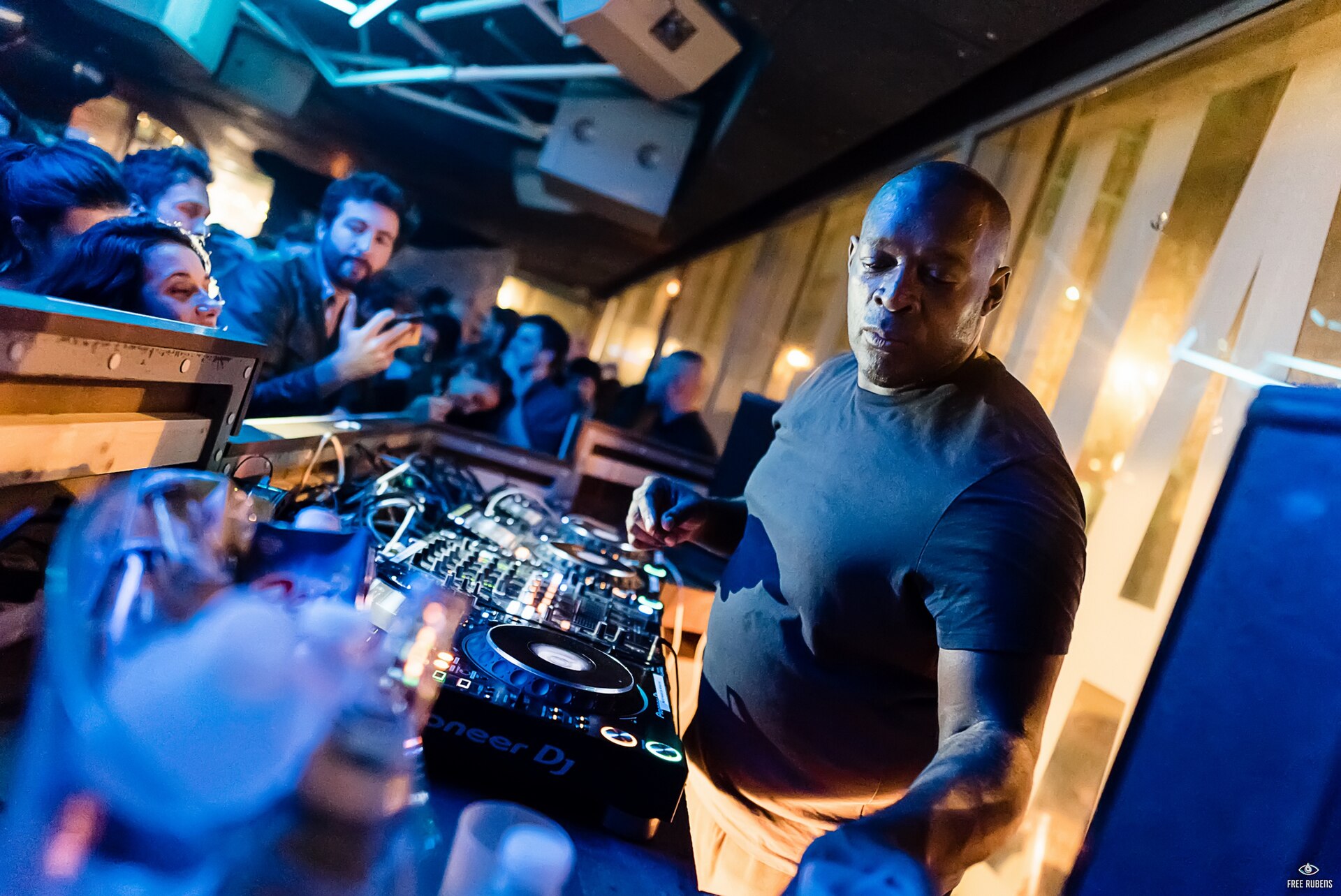
Cover photo: Rubens Ben, CC BY-SA 4.0, via Wikimedia Commons




Leave a Reply