

Records for a Band Nobody Would Sign: How a Marine Built Amphetamine Reptile Into Noise Rock’s Home
Plenty of independent labels began with a manifesto. Amphetamine Reptile began with a band that could not get a record deal. In 1986 Tom Hazelmyer was a serving US Marine stationed in Washington state, and his trio Halo of Flies had been turned down by several labels. So he made the records himself. Looking back in a 2022 interview with Echoes and Dust, he put the motive plainly: “I just wanted my band to have records out.”
What followed was one of the defining homes of American noise rock, a label whose catalogue reads like a map of loud, abrasive guitar music from the late 1980s through the late 1990s.
A Label Built From a Barracks
Hazelmyer had grown up in Minneapolis, where his family moved in 1980, before enlisting in the Marines in 1983. Halo of Flies was a trio he formed with school friends John Anglim and Tim Mac, according to The Quietus. The label started in Washington state, near Seattle, and Hazelmyer later moved it back to Minneapolis, which is where AmRep, as everyone came to call it, found its identity.
He has always insisted it was never a plan. In the same interview he says he never set out to have a label at all. Records for his own band led to trading with fanzines and distributors, and trading led to other bands asking to be released.
Small Pressings, Loud Bands
The early AmRep model was small, physical and a little perverse. The label’s first compilation, released in 1988 under a title that cannot be printed here, opened a long running series of the same name. Hazelmyer told The Quietus it was pressed in a run of about 500 copies, with only a handful on coloured vinyl. The Quietus also notes that the compilation included Mudhoney, alongside the label’s own rising roster.
Around those limited runs, AmRep gathered bands that shared an attitude more than a sound. Cows from Minneapolis released Daddy Has a Tail! in 1989. Helmet’s debut album Strap It On came out on the label in 1990, Surgery issued Nationwide the same year, Tar followed with Jackson in 1991 and Today Is The Day with Supernova in 1993. Unsane, the Melvins, Hammerhead, Boss Hog, Chokebore and Helios Creed also passed through the catalogue. The Quietus singles out Cows as perhaps the best band the label ever had.
Helmet were the commercial exception. Strap It On sold more than 40,000 copies, and Hazelmyer told Billboard in 1995 that its success helped support the other releases that sold less. It is a familiar story in independent music: one record that crosses over pays for the ones that never will.
Art Done by Hand
AmRep’s look mattered as much as its sound. Hazelmyer, a visual artist as well as a musician, designed much of the label’s artwork himself in the early years, which The Quietus describes as making a virtue out of necessity. The label also worked with poster artist Frank Kozik, whose gig posters became part of how the AmRep bands were seen.
That hands-on approach survived the label’s busy years. Today, according to Wikipedia’s account of the label, AmRep is used mainly for limited edition vinyl by the Melvins, Halo of Flies and other longtime associates, and those releases are known for linocut artwork that Hazelmyer carves by hand. When the Nashville Scene interviewed him in 2014 for an exhibition at Third Man Records, he described the show as basically all linocuts.
Winding Down Without Disappearing
By the late 1990s, The Quietus reports, AmRep had been wound up as a full scale business. Hazelmyer went through serious health problems, and after recovering he kept the name alive as an outlet for limited reissues and new work. He has said he tried to step away from records to run bars, and that running the label as a well oiled business holds no interest for him now. In 2022, as he told Echoes and Dust, the Melvins released Bad Mood Rising on AmRep, proof that the outlet was still open.
The label’s story was told in The Color of Noise, a documentary directed by Eric Robel and released in 2015. Hazelmyer, by his own account, took part only as its subject.
The lesson for any band in the TNR universe is an old underground one, but AmRep makes it vivid. Nobody gave Halo of Flies permission. A Marine with a band, a pressing plant and stubbornness built a home for a whole strand of American guitar music, starting with 500 copies of a record nobody else wanted to release. Asked what kept the label going for so long, Hazelmyer answered with two words, persistence and stubbornness.
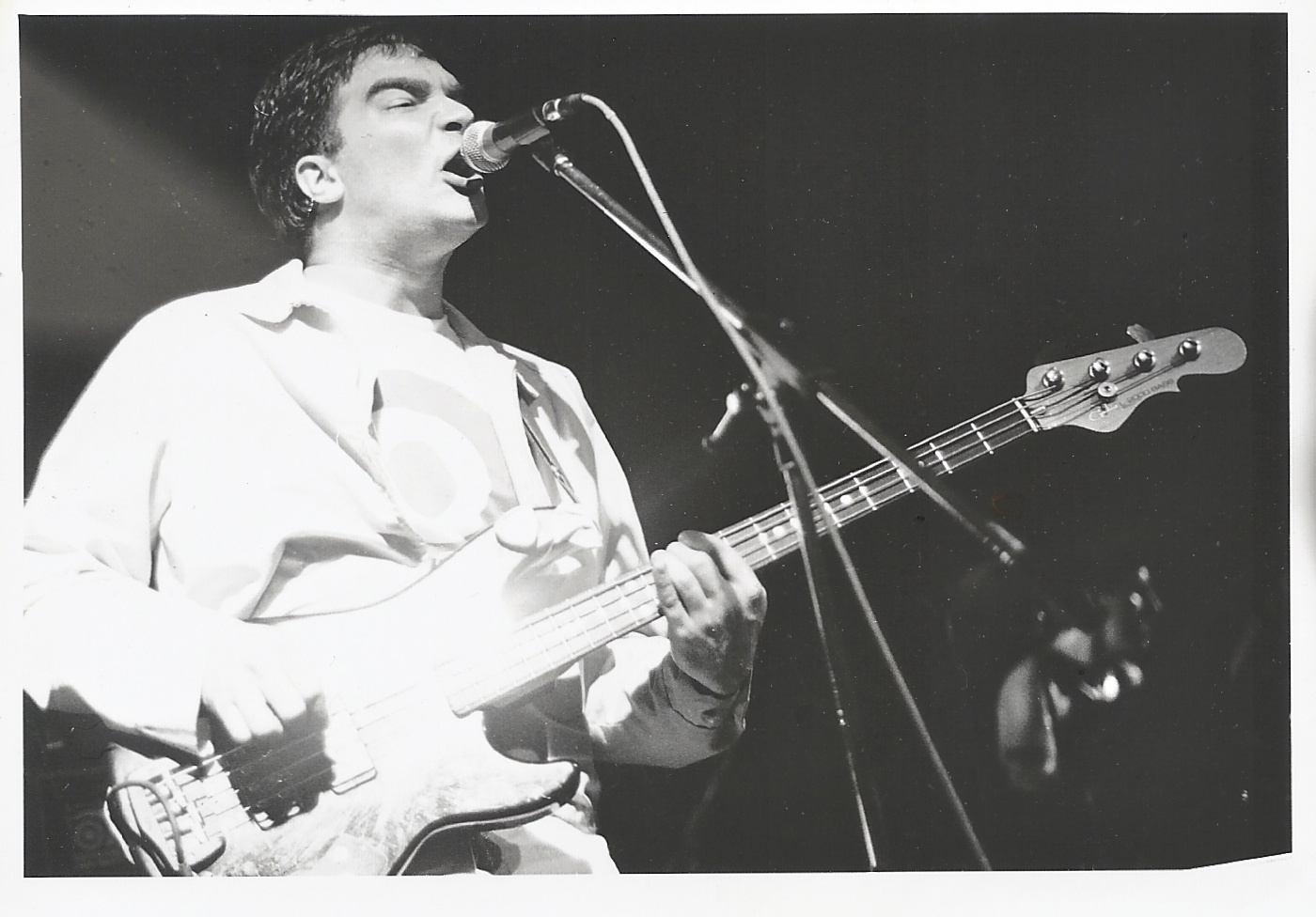
Cover photo: Greg Neate, CC BY 2.0, via Wikimedia Commons




Leave a Reply